
Power is responsible for powering the various components of the computer. The power supplies receive electricity from the cable connected to the city electricity and distribute it in your system.


What is a graphics card?
Graphics cards, often referred to as graphics processing units (GPUs), are specialized hardware components designed to speed up the processing of visual data. Their main purpose is to present images, videos and graphic content on screens. Graphics cards are critical for tasks that involve 2D and 3D rendering, such as gaming, video editing, computer-aided design (CAD), scientific simulation, and more. They relieve the central processing unit (CPU) of the computationally intensive tasks of graphics rendering and allow smoother and more efficient performance in graphics-heavy applications.
The history of graphics processing units goes back to the early days of computing when the need for graphics displays arose. Early computers used rudimentary methods to produce graphics, such as vector displays and simple pixel manipulation. The emergence of dedicated graphics hardware in the 1970s was an important turning point in the history of computing.Graphics processing units have evolved over several generations since then, each offering improved performance, capabilities, and features.
Graphic card architecture and performance
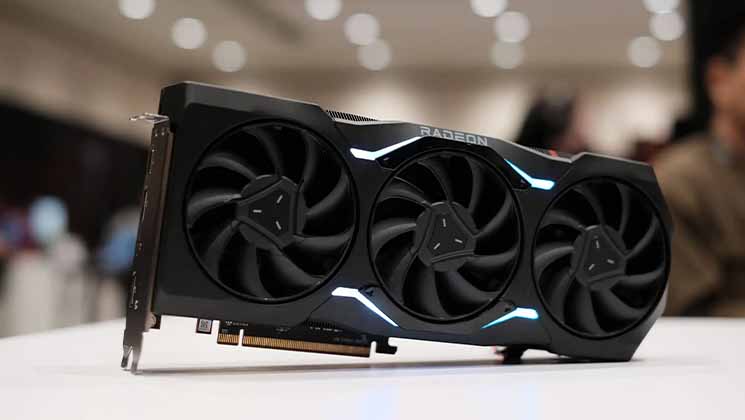
Graphics card architecture and performance
Graphics card architecture refers to the underlying design and organization of a graphics processing unit (GPU) found on a graphics card. It consists of various components, including the core GPU itself, the memory subsystem, pipelines, and hardware accelerators that all work together to render graphics and perform parallel processing tasks efficiently. Several notable graphics card architectures have been developed by companies such as NVIDIA and AMD over the years. Each architecture brings improvements in performance, energy efficiency, and features. Some of the well-known GPU architectures are:
- NVIDIA’s Pascal: The Pascal architecture offered features such as GDDR5X memory, improved energy efficiency, and significant performance over previous generations. It supplied graphic processors like GeForce GTX 10 series.
- Nvidia Turing: The Turing architecture took a major step forward by introducing real-time ray tracing and Tensor cores for artificial intelligence processing. It was used in the GeForce RTX 20 series.
- Nvidia Ampere: The Ampere architecture, used in GPUs such as the GeForce RTX 30 series, continued to improve ray tracing capabilities, performance and energy efficiency.
- AMD’s GCN (Graphics Core Next): The GCN architecture played an important role in AMD graphics cards and provided scalability and support for different product lines such as the Radeon R9 and Radeon RX series.
- AMD’s RDNA (Radeon DNA): The RDNA architecture, which is used in graphics processors such as the Radeon RX 5000 series, introduced architectural improvements with a focus on gaming performance, efficiency, and scalability.
- Intel’s Xe: Intel’s Xe architecture is a newcomer to the graphics card market that aims to deliver high-performance GPUs for gaming, data centers, and artificial intelligence workloads.
These architectures dictate the way graphics are processed and displayed, the number and type of their cores, memory hierarchy and support for specialized features such as Ray Tracing and artificial intelligence acceleration. Advances in GPU architecture are critical to pushing the boundaries of graphics performance and creating new capabilities in gaming, content creation, and scientific computing.
Graphic card types
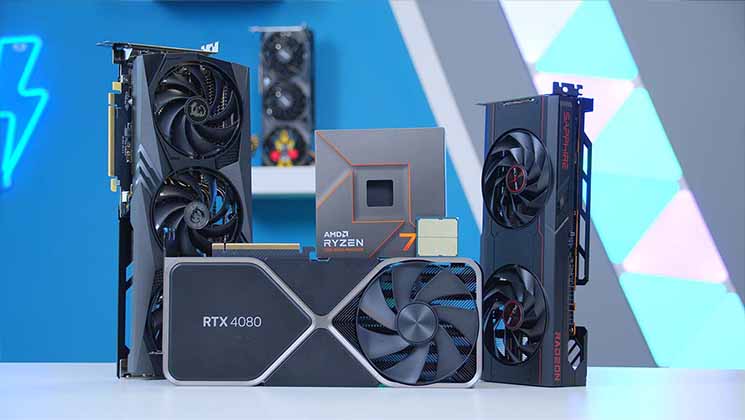
Types of graphics cards
Graphics cards are divided into two main types: discrete and integrated. Discrete graphics cards are separate hardware components that can be added or removed from a computer system. They offer higher performance and are essential for gaming, professional content creation, and other graphics tasks. In contrast, integrated graphics are built into the CPU or motherboard and are more energy efficient, but have lower performance. However, separate or discrete graphics are divided into three categories, which we will discuss further.
- Game graphics cards or gaming graphics cards
Gaming graphics cards are designed for gamers and enthusiasts who want high performance and realistic graphics in video games.These cards are optimized for gaming workloads and have features such as dedicated ray tracing hardware, high clock speeds and sufficient VRAM.
- Workstation graphics cards
Workstation graphics cards, often referred to as professional GPUs, are designed for tasks such as 3D modeling, animation, video editing, and scientific simulations.They are optimized for stability, reliability and accuracy and are suitable for professional use.
- Data center and artificial intelligence graphics cards
In recent years, GPUs have gained popularity in data centers and artificial intelligence applications due to their parallel processing capabilities.These cards are used for tasks such as machine learning, deep learning and data analysis, where massive computing power is required.
Key specifications of graphics card
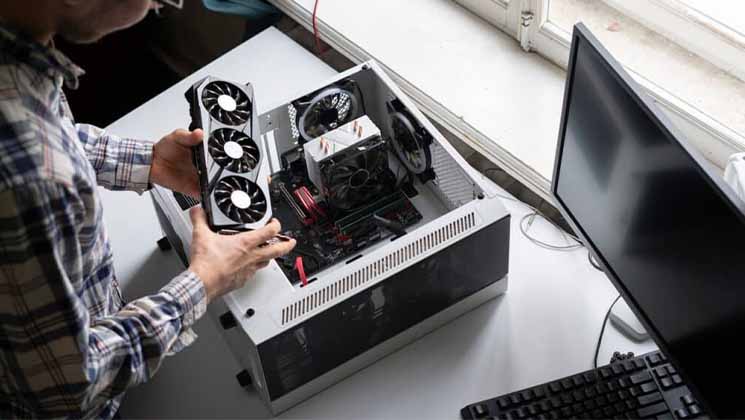
The main specifications of the graphics card
The model and series of a graphics card are essential indicators of its performance and capabilities. Leading manufacturers such as NVIDIA and AMD offer graphics processors in different series, each targeting a specific segment of the market.
- Clock speed and boost clock
In graphics cards, clock speed and boost clock are two important parameters to measure the performance of the graphics card. Clock speed represents the basic performance speed of the graphics card. It means the maximum number of rounds that a processing unit inside the graphics card (for example, GPU) does in one second. This value is measured in Hertz (Hz) and represents the basic processing power of the graphics card. Increasing the clock speed can lead to an increase in the performance of the graphics card in graphics programs and games.
Boost Clock represents a higher complementary speed than the base clock speed of the graphics card that the card can achieve under high workload conditions. In other words, when the graphics card realizes that it needs more power (for example, during graphics-intensive games), the boost clock is used to add more cycles per second of performance. This parameter is also measured in Hertz (Hz) and improves the performance of the graphics card in high workload conditions.
In modern graphics cards, the boost clock is usually higher than the base clock speed and has become a key feature to increase performance in games and graphics applications.
- VRAM (Video RAM)
VRAM or Video Random Access Memory is a type of memory specifically dedicated to storing and quickly accessing graphics data in a computer’s graphics processing unit (GPU). Unlike system RAM (random access memory), which serves as general-purpose memory for the entire computer, VRAM is used to handle the intensive, real-time rendering needs of images and textures in video games, 3D modeling, and other applications. It is designed with compact graphics. . The main purpose of VRAM is to store pixel data, textures, shaders and frame buffers needed to render images on the screen. The amount of VRAM of a graphics card plays an important role in determining its ability to handle higher resolution textures and more complex scenes, and affects the visual quality and overall performance of games and graphics programs. Having enough VRAM is essential for a smooth and accurate gaming experience, especially at higher resolutions or when using advanced graphics settings.
- memory bandwidth
Memory Bandwidth in the graphics card is an important measure that shows the ability of the graphics card to transfer data to and from the graphics memory (VRAM) into the GPU and vice versa. This measure is measured in bytes per second (GB/s or gigabytes per second) and represents the amount of data that the graphics card can transfer between the graphics memory and the graphics processor in one second.
Memory bandwidth is very important because the graphics card needs fast access to various data for graphics operations, including textures, maps, and frames. The higher the memory bandwidth, the more complex and high-quality graphic operations the graphics card will be able to perform. Increasing the memory bandwidth improves the performance of the graphics card in games and graphics programs, especially in high resolutions and graphics settings that require more data.Therefore, memory bandwidth is one of the key factors in upgrading graphics cards with high performance and a better gaming experience.
- TDP (Thermal Design Power):**
TDP or Thermal Design Power is a critical specification related to computer processors including CPU (Central Processing Unit) and GPU (Graphic Processing Unit). Indicates the maximum amount of heat, measured in watts, that a component is designed to dissipate under normal operating conditions. TDPIt serves as a guideline for system builders and consumers to understand the power and cooling needs of a processor. Processors with higher TDP values tend to consume more power and generate more heat, which can affect system stability and cooling solutions. While TDP is an important metric for system design and thermal management, it’s worth noting that actual power consumption and heat generation can vary depending on workload. It is essential to consider TDP usage and real-world usage when designing and configuring computer systems.
- CUDA
CUDA, which stands for Compute Unified Device Architecture, is a parallel computing platform and application programming interface (API) developed by NVIDIA. It enables developers to leverage the computing power of NVIDIA GPUs (graphics processing units) for general-purpose processing tasks beyond traditional graphics rendering. CUDA provides a framework for programming GPUs using the C and C++ programming languages, allowing developers to write massively parallel code that can efficiently run on NVIDIA GPUs. This parallelism makes CUDA valuable for a wide variety of applications, including scientific simulations, deep learning, image and video processing, financial modeling, and more. CUDA has become a critical tool for researchers and developers looking to accelerate computationally intensive workloads and take advantage of the massively parallel processing capabilities offered by modern NVIDIA GPUs.
- Invoice form and connection
Graphics cards come in many forms, including full-size cards for desktop PCs and smaller types for compact systems. Connectivity options, such as display outputs and ports, vary between models and affect compatibility with displays and peripherals.
Read more: Ethereum Mining with Graphics Card – Challenges and Opportunities</ a
Game Performance
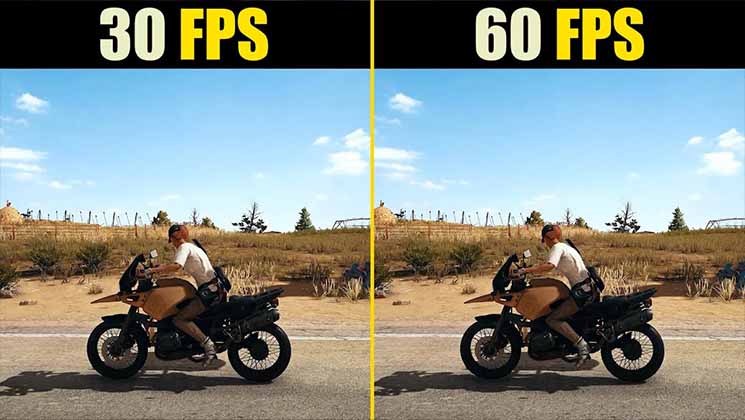
WHAT IS FPS
Despite mentioning the key specifications of graphics cards, there are some items that are especially important for gamers.
- FPS (frames per second) and gaming experience
FPS or “frames per second” is a basic performance measure when it comes to graphics cards. It measures the number of frames or images that a graphics card can render and display on the screen in one second. A higher FPS results in smoother, smoother images, which is important for gaming, video playback, and other graphics applications. Gamers often look for higher FPS values such as 60 FPS or more to ensure responsive and immersive gameplay. FPS The actual achievable performance depends on a variety of factors, including the processing power of the graphics card, the complexity of the graphics in a particular application, and the refresh rate of the monitor. FPS serves as a critical metric for evaluating the performance and capabilities of graphics cards and helps users choose the right hardware for their specific needs and preferences.
- Ray Tracing and DLSS (Deep Learning Super Sampling)
Ray Tracing و DLSS (Deep Learning Super Sampling) Technologies are improvements that are used in modern graphics cards, mainly by NVIDIA, to increase the visual quality and performance of video games. Ray tracing is a rendering technique that simulates how light interacts with objects in a virtual environment. It models the path of individual light rays as they bounce off surfaces, creating very realistic light, shadows, reflections, and refractions in video games.This technology significantly improves visual fidelity and immersion in games by providing realistic lighting effects and producing scenes that closely mimic real-world physics. However, Ray Tracing is computationally intensive and can place a significant load on the graphics card, potentially affecting frame rates. This is where DLSS comes into play.
DLSS or Deep Learning Super Sampling is an artificial intelligence based upscaling technique developed by NVIDIA. It uses deep learning and machine learning algorithms to upscale lower resolution images to higher resolution, effectively increasing image quality while maintaining or even improving performance. DLSS uses dedicated artificial intelligence cores on compatible NVIDIA GPUs for image enhancement. That results in sharper images without the noticeable performance associated with rendering games at higher native resolutions. This technology is especially useful for gamers, as it allows them to enjoy the benefits of Ray Tracing while maintaining a playable frame rate. DLSS is constantly improving with each generation of NVIDIA graphics cards, making it a valuable feature for those looking for the best gaming experience with enhanced visuals.
- Graphic card overclocking
Graphics card overclocking is the process of increasing the clock speed of a graphics processing unit (GPU) beyond the specifications set by its manufacturer to achieve higher performance levels. This includes adjusting the core clock, memory clock and GPU voltage settings using software tools or the card’s own firmware. Overclocking can lead to improved game performance, higher frame rates, and better graphics rendering. However, it also generates more heat and can lead to stability problems or reduced lifespan if not done carefully. Enthusiasts and gamers often engage in overclocking to max out their graphics card, but this should be done with care, temperature monitoring, and stability testing to avoid possible damage or failure.Some graphics cards have factory overclocks, where manufacturers increase the clock speed to provide better performance.
- Standardization and performance criteria
Benchmark tools and performance metrics help users objectively evaluate the performance of their graphics card.Popular benchmarks such as 3DMark and Heaven Benchmark provide detailed results and comparisons.
The best graphics card brands
The graphics card industry is highly competitive and has several prominent manufacturers worldwide, each of which is known for producing GPUs and graphics cards that cater to different market segments. are known The market of graphics processors is specially controlled by three companies, Nvidia, AMD and Intel, and other hardware manufacturers such as MSI and Asus use the main chips of these brands to produce different types of cards. They make graphics.
NVIDIA Headquartered in Santa Clara, California, it is one of the most recognized names in the graphics card industry. They are known for their GeForce graphics cards which are popular among gamers and professionals. NVIDIA GPUs are widely used for gaming, artificial intelligence, scientific computing and deep learning due to their exceptional performance and advanced technologies such as Ray Tracing and DLSS.The company’s product line includes a wide range of graphics processors, from affordable to advanced gaming graphics cards. This chip can be found in different types of Inno3D graphics cards.
AMD، Based in Santa Clara, California, it is another major player in the graphics card market. They offer Radeon graphics cards that compete with NVIDIA’s GeForce series. AMD is known for its emphasis on affordability and performance in the mid-range and budget segments, making them a popular choice among budget-conscious gamers.Their graphics processors are also used in game consoles such as Playstation and Xbox and further strengthen their presence in the game industry.
Among the prominent manufacturers of graphics cards are ASUS, MSI, Gigabyte, EVGA and Graphics card plate pointed out. These companies often produce graphics processors based on NVIDIA and AMD architectures that offer a variety of card designs, cooling solutions, and features to meet different customer preferences and needs. The graphics card market is constantly evolving, with new products and technologies being introduced regularly, ensuring a vibrant and competitive landscape for consumers and professionals alike. In the following, we will introduce some top brands in this field.
- Asus
Asus is a well-known graphics card manufacturer known for producing a wide range of GPUs that cater to both gamers and professionals. Collection Asus graphics card includes models under “ROG (Republic of Gamers)”, “TUF Gaming” and “Dual” series, each of which is designed to meet specific performance and budget needs. ASUS graphics cards often feature innovative cooling solutions such as DirectCU or Axial technology cooling systems that ensure efficient heat dissipation and quieter performance during intense gaming sessions.In addition, ASUS GPUs often come with factory overclocks to improve performance out of the box and provide software tools like GPU Tweak for enthusiasts to further tune their graphics cards. Asus has a reputation for quality and innovation in the graphics card market, making its products popular among PC gamers and professionals looking for high-performance solutions.
- MSI
MSI (Micro-Star International) is a reliable manufacturer in the field of graphics cards, which is known for producing a wide range of graphics processors that suit the needs of gamers and professionals. MSI graphics card series including models It belongs to the “GAMING”, “VENTUS” and “SEA HAWK” series, each of which offers a different balance of performance and features. MSI graphics cards often come with advanced cooling solutions such as Twin Frozr or TORX fans that ensure efficient heat dissipation and low noise levels during demanding tasks or rendering.MSIIt is also known for its commitment to quality and reliability, often incorporating high-quality components and rigorous testing methods into its products. With a strong presence in the gaming community and a reputation for producing high-performance GPUs, MSI graphics cards are a popular choice for those looking for powerful and reliable graphics solutions for their PCs.
- Gigabytes
Gigabyte, a leading manufacturer in the graphics card industry, is known for its diverse lineup of GPUs designed to meet the needs of gamers, developers, and professionals. GIGABYTE offers a wide range of graphics cards under different series including “AORUS”, “Gaming OC” and “WindForce”. Gigabyte graphics card variants often have innovative cooling solutions Like the WINDFORCE or AORUS cooling system, they ensure efficient heat dissipation and silent operation during intensive work.GIGABYTE graphics cards are also known for their durability, as the company integrates high-quality components and performs rigorous testing to ensure reliable performance. With a strong emphasis on gaming and content creation, GIGABYTE GPUs are favored by users looking for powerful and reliable graphics solutions to enhance their computing experiences.

motherboard
motherboard
, pc
Motherboard is the mother and main board of the computer, which is located inside the case, and its job is to connect some computer components to each other and control the computer and logical operation of different components.


